We label the words,and the silence between them.
Speech and text in the languages you train for, transcribed, timed, speaker-labeled and tagged by native speakers, in the formats your pipeline already reads. Arabic and its dialects at a depth few others can offer. A pause is not nothing to us: we mark whether it is thinking, breathing, hesitating or giving up, so your model learns the meaning, not only the sound. From a basic transcript to every detail, we go as deep as your case needs.
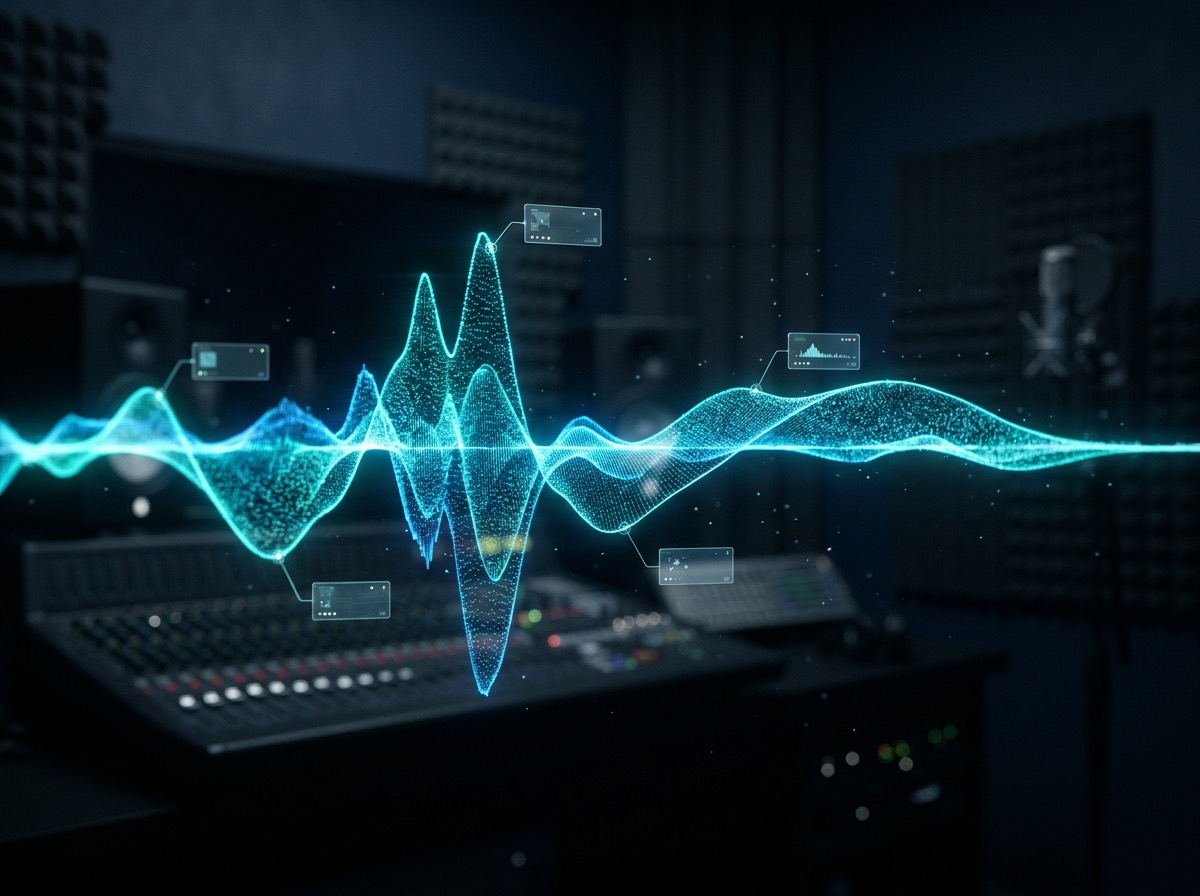
We label the words. And everything between them.
Where other sets write [pause], we write what the pause means: thinking, breathing, hesitating, holding back, giving up, done talking. Each with a time, each by a native speaker who hears the difference. Your model learns the meaning, not only the sound.
- Pauses by type, not only by length
- Breaths, sighs, laughter, overlap
- Tone and emotion, judged by several raters
- Dialect and code-switching, written one way
السلام عليكم
“Peace be upon you”Waiting
0.9 s of silenceBreath in
0.4 s of breathيعني
“I mean…”Thinking
0.8 s of silenceالطلب حقي ما وصل
“My order hasn’t arrived”Holding back
0.4 s of silenceثاني مرة
“Again”أفهمك
“I understand you”Giving up
0.9 s of silenceSigh
0.3 s of breathطيب
“Okay”Turn done
1.4 s of silenceEvery voice gets its name. Every overlap gets both owners.
Speaker identification and diarization the way the field expects it: each speaker found, named and kept consistent across the whole set, turns timed to the sample, overlaps marked with both voices, background sounds on their own lane. Delivered as RTTM with the transcript, so it drops straight into your pipeline, and checked against a gold set with the diarization error rate reported.
- Speaker ID consistent across recordings
- Overlaps marked, both voices kept
- Turn-taking cues for voice agents
- RTTM, TextGrid, ELAN, JSONL
A silence is not nothing.
Where other sets write [pause], we write what it means. Here are eight things a gap or a sound can be, played on twelve seconds of one call, and the shape that gives each away. Our people label them by ear, three raters agree, and the model learns to tell them apart.
Breathing
In, out, a sigh, a catch: marked and timed, never cut, so a synthetic voice breathes where a person would.
Hesitation
يعني, أمم, a word started twice: the filler and the doubt behind it, both on the timeline.
Thinking
The pause before an answer, kept apart from the pause after one. A voice agent that confuses them talks over its users.
Frustration
The tone rising, the words getting shorter, the pause that holds something back. Several raters, agreement reported.
Overlap
Two people at once: both transcribed, both timed, who interrupted whom.
Laughter, sighs, sounds
Their own tier, with the speaker and the duration, and the background: a car, a street, a phone line.
Turn done
The silence that hands the floor over against the one that only takes a breath: the label turn-taking models are trained on.
Context
Who is speaking to whom about what, the mood and how it moves, the dialect, the device, whether the recording is usable at all.
Who comes to us
Teams training models on speech and text, in any language. Arabic and its dialects are the depth few others have; English, French, Urdu and the rest come with the same care.
- 01
Speech recognition
Verbatim transcripts with word timestamps, speaker turns, noise and channel conditions, in the accents your users actually have.
- 02
Text to speech and voice cloning
Studio reads and conversational scripts with breaths, laughs and pauses marked, phone-level alignment, consent and licence per voice.
- 03
Voice agents and contact-centre AI
Turn-taking, interruptions, backchannels, intents and emotion from real calls, so the agent knows when to speak and when to wait.
- 04
LLM and foundation-model teams
Instruction data, preference pairs, red-team prompts and evaluation sets written by natives, not translated from English.
- 05
Automotive and smart devices
Wake words and commands across speakers, distances and cabins, with the road noise and the music left in on purpose.
- 06
Healthcare and dictation
Clinical speech with the terminology checked by people who know it, PII handled under consent, data kept where the law wants it.
- 07
Media and subtitling
Broadcast and podcast transcripts, speaker-labeled and time-coded, ready for subtitles and translation.
- 08
Research labs and universities
Corpora with full documentation: guidelines, agreement scores, metadata, and the formats reviewers expect.
From basic to every detail
You choose the depth. The same people, the same guideline, more tiers.
- 01
Basic
Clean verbatim transcript, speaker turns, timestamps per utterance. Enough to train a recogniser.
- 02
Timed
Every word to the sample, every silence and breath as its own clip. Enough for a voice that sounds like a person.
- 03
Meaning
Pauses by type, fillers, emotion, tone, overlap, audio events. Enough for an agent that knows when to speak.
- 04
Context
The situation, the intent, the dialect, the environment, quality per recording, and produced cases, red-team prompts and evaluation sets built on top. The whole picture, for any use case you name.
What we label
- 01Verbatim transcription with word-level timestamps
- 02Speaker diarization (who spoke when), delivered as RTTM
- 03Dialect and code-switch tags per utterance, Arabic with English or French
- 04Diacritised or normalised transcripts to your written spec
- 05The paralinguistic tier: pauses by type, breaths, fillers, hesitations, laughter, sighs, overlap, background noise
- 06Thinking pauses, finished sentences and backchannels for turn-taking models
- 07Emotion and frustration labels, categorical plus arousal and valence, from several raters
- 08Intent and dialogue acts, ISO 24617-2 or your own scheme
- 09Audio events and non-speech sounds as their own tier
- 10Named entities, PII marks and redaction in both audio and text
- 11Text classification, sentiment and summaries for Arabic text corpora
- 12Quality scores per recording: device, environment, noise, usable or not
Built on the standards the industry uses
Your model team should never have to convert, guess or re-check. We deliver in the formats and against the measures they already use.
- 01
RTTM and speaker labels
Diarization in the NIST RTTM form, speaker IDs consistent across the set, overlaps included; scored with the diarization error rate.
- 02
TextGrid, Praat and ELAN
Tiers for words, phones, silences and events, openable in Praat and ELAN as they are, no conversion.
- 03
JSONL, CSV and manifests
One line per utterance with timings, speaker, dialect, device and environment, plus WAV at 16 or 48 kHz.
- 04
ISO 24617-2 dialogue acts
Intent and dialogue-act tags on the ISO scheme, or mapped to your own, the mapping documented.
- 05
ISO 639-3 and dialect codes
Language and variety tagged per utterance (arb, acm, afb, apc, arz, ary…), code-switching marked at the word.
- 06
Agreement, measured
Several raters on the subjective tiers, Cohen's kappa or Krippendorff's alpha reported, disagreements resolved and logged.
- 07
WER and CER checks
Transcripts verified against a gold set; word and character error rates reported per batch before delivery.
- 08
PDPL, GDPR and consent
Consent per recording, PII marked or redacted in audio and text, data kept in the Kingdom when you need it to be.
Arabic done properly
- 01
Dialects, not one Arabic
Gulf, Levantine, Egyptian, Maghrebi and MSA are different in sound and in spelling. Each gets native annotators and its own guideline.
- 02
Code-switching
Arabic with English in the same sentence is normal speech. The guideline fixes how it is written, every time, so your model is not confused by us.
- 03
Diacritics and normalisation
Whether to write the harakat, how to treat alef and hamza, ta marbuta, alef maksura: decided with you up front and applied the same way across the set.
- 04
Scarce by nature
Fully supervised multi-dialect Arabic corpora are measured in tens of hours. Data made with care is worth more than data scraped in bulk.
Beyond labeling
The work around the data, when you need it.
- 01Scripted and spontaneous speech collection: studio, phone and field recordings, one speaker per channel
- 02Production of cases: scenarios, role-plays and scripted situations recorded for your use case
- 03TTS script writing and studio reads
- 04Wake-word and command recordings across speakers and devices
- 05Synthetic-data validation: human checks and filtering of generated audio and text
- 06Red-teaming: Arabic and dialect adversarial prompts for LLMs and voice agents
- 07Culturally grounded evaluation sets and RLHF preference data
- 08Human-in-the-loop review of live model output, turned into new training examples
How we work
- 01
Pilot first
A small batch, your guideline or ours, agreement scores reported. You decide after you have seen the work.
- 02
Guidelines and a gold set
Written with you, versioned, and tested on a gold set before production. Edge cases go into the guideline, not into guesswork.
- 03
Several passes
Label, review, resolve. Disagreements are measured, not hidden; most of them are boundaries, so we time to the sample.
- 04
Delivery and a direct line
JSONL, TextGrid, RTTM or CSV with metadata, on your schedule. Questions go to the people who did the work, not to a ticket queue.
Handling your data
- 01
In-house people
Employed annotators, not an anonymous crowd. Native speakers, trained on your guideline, under NDA.
- 02
Consent and licence
Every recording we collect carries a consent record and clear licence terms: train-only or redistribution, as agreed.
- 03
Secure by practice
Encrypted storage on our own servers, named access, deletion on request, PII redacted where you ask.
- 04
Formats you expect
WAV 16 kHz or 48 kHz, JSONL per utterance, TextGrid tiers, RTTM, CSV manifests, with speaker, dialect, device and environment metadata.

Start with a pilot.
Send us an hour of audio or a thousand lines of text with what you need from it. You get the batch back labeled, with the numbers, and a guideline you can keep.
Contact us